
Memory Techniques
How to Memorise Numbers
Numbers are abstract, which is why they're so hard to remember. Turn them into pictures and they stop being abstract. Here are the three systems memory athletes actually use.

The reason you cannot remember a 12-digit number is not that your memory is bad. It is that numbers have no shape, no story, no smell, no sound. They are pure abstraction. Your brain has nothing to grab onto.
Fix that. Turn the numbers into pictures, and you can hold a 20-digit number in your head after looking at it once. This is not a gift. It is a technique. Three of them, in fact, and you will use different ones for different jobs.
Memory athletes use these systems to memorise hundreds of digits at a time. Students can use them to remember dates and formulas. Salespeople can use them to recall sales data. Product leaders can use them to create influence with statistics (this was essentially what I did for 10 years across the BBC, Microsoft and the start-up world).
Here are the three number systems: what they are, how each one works, when to use them, and how to practise.
Why numbers are hard
Before getting to the techniques, it helps to understand the problem.
Your brain evolved to remember places, faces, stories, and sensory experiences. None of these involve abstract symbols. When you read the digits "5 9 1 4 0," your eyes see five shapes, but there is no smell, no sound, no movement, no narrative, no emotion. There is nothing for your brain to hook onto.
Compare that to a sentence. "The hawk swooped down and grabbed the rabbit." Five seconds and you have a clear mental image, you know what it would sound like, you can almost feel the air. Days later you would still be able to recall most of that sentence. The number 59140 would be gone within minutes.
The fix is to give the number meaning, make it visual, the kind of thing your brain is good at remembering. The three number systems are three different ways of doing exactly that.
The three number systems
- The number shape system, where each digit is replaced with a picture that looks like the digit. 1 is a pencil. 2 is a swan. 9 is a balloon. Easy to learn, useful for short numbers, the best place to start.
- The number rhyme system, where each digit is replaced with a picture that rhymes with the digit. 1 is a bun. 2 is a shoe. 3 is a tree. Equally easy, equally useful for short numbers. Some people find rhymes stick faster than shapes.
- The major system, where each digit is replaced with a consonant sound. Pairs of digits become words. 34 becomes "mare." 17 becomes "tack." This is the workhorse system of memory athletes and the only one that scales to memorising hundreds of digits at speed.
I used a combination of 1. and 2. to help my oldest kid learn his times tables when he was around four.
The system you really want to learn if you want to be great at numbers is the major system or phonetic system.
Let's go ahead and break down each one.
The number shape system
Here is the standard mapping. Read it once and you will already know most of it.
- 0 is a Polo mint, or a hole, or a football
- 1 is a pencil
- 2 is a swan
- 3 is a snake
- 4 is a sail
- 5 is a hook
- 6 is a bag
- 7 is an axe
- 8 is a snowman
- 9 is a balloon on a string
- 10 is Laurel and Hardy (the thin 1 and the round 0 side by side)
Memorising a number is then a matter of swapping digits for pictures and tying the pictures into a short story.
Pick one image per digit and stick with it. The decision is made in advance, so when you see a 1 the image fires automatically.
A worked example
Let us memorise the number 5 9 1 4 0.
- 5 is a hook
- 9 is a balloon
- 1 is a pencil
- 4 is a sail
- 0 is a polo mint
Picture this. A giant hook snags a red balloon. The balloon is being towed along by a pencil that is rowing furiously. The pencil has a billowing sail strapped to its back. On top of the sail, spinning like a lifebuoy, is a polo mint the size of a tractor tyre.
Ten seconds to build. Visualise it two to three times.
The number rhyme system
The rhyme system works on exactly the same principle as the shape system, but the trigger is sound rather than appearance.
- 0 is a hero
- 1 is a bun
- 2 is a shoe
- 3 is a tree
- 4 is a door
- 5 is a hive
- 6 is sticks
- 7 is heaven
- 8 is a plate
- 9 is wine
- 10 is a hen
The rhyme system is often the better one to learn first, because it tends to be faster for absolute beginners.
For my kid with his times tables, the first digit used the number shape system and the second digit used the number rhyme system.
11 would be a pencil (1) eating a bun (1). 15 would be a pencil in a beehive (hive for five). 24 would be a swan banging its head on a door. Kids are super creative so he had a ton of fun creating characters.
The major system
This is the one you really want to master for the real world.
Every digit owns one or two consonant sounds. Take two digits, add whatever vowels you like between the consonants, and you have a word you can picture.
The code:
- 0 is S or Z
- 1 is T or D
- 2 is N
- 3 is M
- 4 is R
- 5 is L
- 6 is SH, CH, or J
- 7 is K, hard C, or hard G
- 8 is F or V
- 9 is P or B
Vowels, along with W, H and Y, count for nothing, which is what lets you pad the consonants out into a word you can say.
So 34 becomes a word with M followed by R: "mare," "mire," "mayor." Pick one. 91 becomes B/P followed by T/D: "bat," "bait," "bode." 78 becomes K followed by F/V: "cave," "café," "cove."
To use this on the fly you want to go one step further and keep ready-made pictures for every pair of digits, 00 to 99.
There's a catch. It's going to take some effort to get it set up, realistically 2 to 4 hours to design the matrix from 00 to 99, and then a few weeks to start to be able to recall them at a decent speed.
Each pair of digits is an image. Each four-digit number is two images. Each twenty-digit number is ten images, chained in a story or placed on a memory palace, a familiar route such as the walk through your home, with one image waiting at each spot.
The full major system is set out in The Major System Explained. For now, know that this is where serious number memorisation lives, and that it is well worth the upfront effort if numbers feature in your work or study.
Why this matters in real life
You may never need to memorise 100 digits of pi. But the same systems handle every number you actually do need to remember.
Product stats and metrics. This was my own personal "go-to" use case when I used to work in the product world. When you have the numbers you have the ability to influence.
Statistics for a presentation. Turn the key figures in your pitch into images and place them at locations. You will deliver the numbers from memory while looking the audience in the eye. Another one of my favourites.
Other use cases may be more or less valuable. What you really want to do is figure out, where in your life do numbers show up and how could this strategy add value?
Start with your work or business and then everyday in your life.
Perhaps...
Phone numbers. Even a 12-digit international number becomes six paired images in the major system. Although with mobiles this use case could be less valuable.
PINs and passcodes. A 4-digit PIN is two images stuck together. The PIN 4729 becomes "RaKe" and "NaP" so you see a Rake taking a Nap.
Dates and historical events. Everyday dates like birthdays or events can be fun or maybe you enjoy being able to quote dates in general.
Credit card numbers and account numbers. Eight to sixteen digits is trivial once you have a system.
The system also gets faster the more you use it. After 4 to 6 weeks, your brain may start converting digits with less effort.
How to practise
The systems are simple in principle. Making them automatic is a matter of repetition with the right structure.
Here is a six-week plan that will get you up and running.
- Day 1. Opt for the major system and focus on the code for 0 to 9.
- Days 2 and 3. Design your number matrix from 00 to 99.
- Next few weeks. Memorise a line at a time: 10 to 19, 20 to 29 and so on. A little bit every day.
- Weeks 3 to 6. Run short daily recall drills and start using it in the real world.
By six weeks of regular use your brain will have measurably changed, and you will be looking around for numbers to memorise just to feel the technique working.
For a structured daily drill that handles all three systems and tracks your progress, mindforge.memoryschool.com is built for exactly this.
Where to go from here
If you want to put your new number skill straight to work, How to Memorise Phone Numbers and How to Memorise Dates and Historical Events are the obvious next reads.
The thing nobody tells you about memorising numbers is that the first time it works, it changes the way you walk around in the world. Numbers stop being something you avoid and start being something you collect. The skill compounds.
That is the gift of number-system mnemonics. They are unglamorous, slightly fiddly, and absolutely worth it.
Memory map
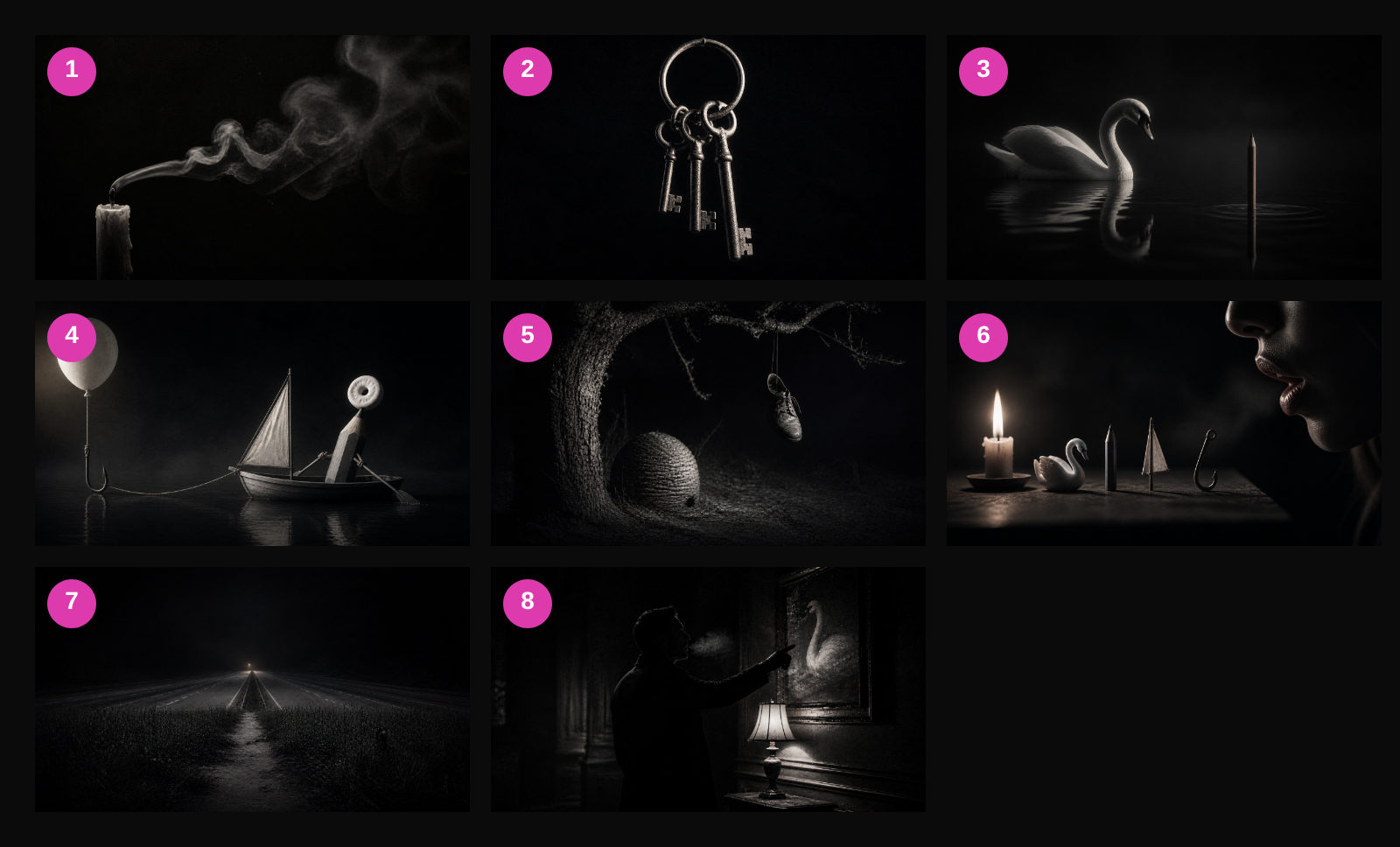
- Numbers are hard because they have no shape, story, smell or sound. Image: grey smoke slipping through an open hand.
- Give the number meaning: make it a picture. Image: a plain stone turning into a bright, detailed sculpture.
- Three systems: number shape, number rhyme and the major system. Image: three keys of different sizes on one ring.
- Number shape: the picture looks like the digit, pencil, swan, snake, sail, hook. Image: a swan gliding past an upright pencil, a snake coiled on the bank.
- The worked chain for 59140: a hook, a balloon, a rowing pencil with a sail, a giant Polo mint. Image: a hook snagging a red balloon towed by a rowing pencil, a huge mint spinning on its sail.
- Number rhyme: bun, shoe, tree, door, hive; with kids, shape for the first digit and rhyme for the second. Image: a swan banging its head on a door while a pencil munches a bun.
- The major system: each digit is a consonant sound, and pairs of digits become words; 34 is a mare. Image: a mare trotting along a row of open mouths, each shaping a different sound.
- The catch: a few hours to design your 00 to 99 matrix, a few weeks to recall it at speed. Image: a wall of a hundred empty frames, one row being filled with pictures.
- PIN 4729: a rake taking a nap. Image: a garden rake asleep in a hammock.
- Use it where numbers matter to you: product stats and figures in a presentation. Image: a presenter gesturing at a chart while looking straight at the audience.
- Practise over six weeks: the code, the matrix, a line a day, then daily drills and real use. Image: a wall calendar with a new row of small pictures added each day.
Sources
- Mark Channon, How to Remember Anything (Hodder Education)
Loci
Build the memory palace in this article inside Loci — store your locations, link images, and rehearse with spaced repetition.
Try it in LociMemory School community
Learn directly with Mark inside the Memory School community on Skool — monthly lessons, practice, and Q&A.
Join Memory SchoolAbout the author
Mark Channon
Grand Master of Memory (1995). Author of three books on memory published by Hodder and Nick Hern. Creator of BBC1's Monkhouse's Memory Masters. Memory coach on Channel 4's Can I Improve My Memory?
Read full bio →