
Memory Techniques
The Major System Explained
The major system turns every pair of digits into a word. It's the system to learn if you want to be great at numbers, and it's not as complicated as it looks.

If you only ever learn one number-memorising system, make it the major system. It is the classic system for turning numbers into pictures, and the starting point for the bigger number systems used in memory competitions. Once you have it, you have the keys to the whole kingdom.
The good news. It is not as hard as it looks. The bad news. The first week is a slog. Push through that and the rest is downhill forever.
A short history
The major system has been around for nearly 400 years. A French mathematician called Pierre Hérigone is generally credited with the earliest version in the 17th century. The system was refined and popularised through the 1700s and 1800s by writers like Gregor von Feinaigle, and it has been the foundation of serious number memorisation ever since.
Modern memory champions use slight variations on the same core code. The names you will see in memory literature (the "phonetic system," the "Major mnemonic," "Major Herigone's mnemonic") all refer to the same underlying idea. The code in the next section is the standard form used in English-speaking memory training today.
What the major system does
Each digit from 0 to 9 is assigned one or two consonant sounds. To memorise a number, you take pairs of digits, fill in the vowels yourself, and make a word.
That is it. 34 becomes a word starting with M and ending with R: "mare." 27 becomes a word starting with N and ending with K: "nick." 91 becomes a word starting with B or P and ending with T or D: "bat."
Once every two-digit number has a fixed image attached to it, you can memorise long numbers by stringing the images together in a chain (a short story in which each image links to the next) or placing them on a memory palace (somewhere familiar, like your house, where each image waits at its own spot on a set path).
The code
Learn this table once and it keeps working for you.
- 0 is S or Z (think "zero starts with Z")
- 1 is T or D (one downstroke, like a T)
- 2 is N (two downstrokes in an N)
- 3 is M (three downstrokes in an M, and turn an M on its side and it looks like a 3)
- 4 is R (four ends in the sound "r")
- 5 is L (hold up your hand: five digits, and your thumb and first finger make an L)
- 6 is SH, CH, or J (picture a 6 on a ship, eating chips with jam)
- 7 is K, hard C, or hard G (put two 7s back to back and you have a K; both sounds come from the back of your throat)
- 8 is F or V (picture a van with an 8 on it, driven by a fish)
- 9 is P or B (flip a 9 and it looks like a P or a B, like balloons on a stick)
Vowels (A, E, I, O, U) and the letters W, H, and Y carry no value. You sprinkle them in freely to make pronounceable words.
The reason the mapping is based on sounds rather than letters is important. "Cat" and "Kite" both encode 71, because both start with a hard K sound. "Cell" encodes 05, because the C is pronounced as an S. Listen to the word, not the spelling.
How to read the code
Take the number 3 4.
- 3 is M
- 4 is R
- Add vowels: mare, mire, mayor, mower, more
Pick whichever feels most vivid and stick with it forever. Fix one image per two-digit pair so you never have to think.
Try another. 9 2.
- 9 is P or B
- 2 is N
- Add vowels: pen, pin, bone, bun, pain
And another. 1 7.
- 1 is T or D
- 7 is K or hard C
- Add vowels: tack, deck, duck, tick, dock
After a week of practice, the conversion gets quicker. After a few weeks, you stop noticing you are doing it.
A few practice rules
A handful of conventions that will save you time once you start.
Use the sound, not the spelling. "Knee" is 2 (the K is silent). "Phone" is 82 (F sound, N sound). "Show" is 6 (the SH is one sound). When in doubt, say the word out loud and listen.
Double letters with the same sound count once. "Mommy" is 33, not 333. "Berry" is 94, not 944.
Different sounds in the same letter count separately. "Action" is 762 (K, SH, N). "Phonics" is 8270 (F, N, K, S).
Stick with one image per number. If 34 is "mare" for you, it stays "mare" forever. Switching back and forth between "mare," "mire," and "mayor" defeats the whole purpose of the system.
Vowels are free. They do nothing for the code, so use them however you like to make pronounceable words.
Building your 00 to 99 image set
To use the major system seriously, fix one image for every two-digit number from 00 to 99. That is a one-time investment of a few hours, after which the system runs forever.
A taster:
- 00 is S, S: seas, sauce
- 01 is S, T: suit, satay
- 02 is S, N: sun, scene
- 03 is S, M: sumo, seam
- 04 is S, R: sewer, soar
- 05 is S, L: sail, sole
- 10 is T, S: toes, dose
- 15 is T, L: tail, towel, doll
- 23 is N, M: name, gnome
- 34 is M, R: mare
- 45 is R, L: reel, rail, royal
- 56 is L, SH: leash, lash
- 67 is SH, K: shock, chick, jack
- 78 is K, F: cave, café, calf
- 89 is F, P: fob, fop
- 99 is P, P: pope, pup, baby
Pick one image per pair and write the full 00 to 99 list down somewhere you will refer back to. Build the set in chunks of ten. Test each chunk before moving on. With daily practice, a fortnight is a realistic time to have all 100 images in your head.
For face cards in card-memorisation systems, you can extend the major system slightly. How to Memorise a Deck of Cards sets out the full card system, face cards included.
A worked example
Let us memorise the number 3 4 9 2 1 7.
Break it into pairs: 34, 92, 17.
- 34 is mare
- 92 is pen
- 17 is tack
Now chain them. A wild mare is chewing a giant pen. The pen leaks ink onto a sharp tack lying on the ground.
Three images. One short story. That is 349217.
For a longer number, say 3 4 9 2 1 7 5 6 8 9, add 56 (leash) and 89 (fob), and extend the chain. The mare bites the pen, which leaks onto the tack, which is hooked to a leash, which is held by a man swinging a fob watch.
Ten digits. Five images. Encoded in under thirty seconds once you know your 00 to 99 set. With a memory palace instead of a chain, the same five images get placed at five locations and you can recall them in any order, forwards or backwards, weeks later.
A real-world example: a startup's key numbers
Here is how I have used it for real. In October 2019 I was running Blinq, a startup that ran live-streamed quiz shows to help GCSE students (the exams taken at 16 in England) prepare for their exams. Every month we tracked a handful of key numbers: what each new player cost us, how many came back, and how many were playing. I put them on a memory palace around Piccadilly Circus (a set of places in your mind, each one holding a picture), one picture per location.
- Beef, 98, on the big sign. B is 9 and F is 8. It stood for our cost per install, what we paid to get each new player to install the game: 98 pence. Not 98 pounds; common sense told me that at 98 pounds we would have been out of business in a week.
- A chair, 64, by the lamppost. CH is 6 and R is 4. Our week-one retention: 64% of new users came back in their first week.
- A lead bar, 51, thrown through the window of Gap. L is 5 and D is 1. Our month-one retention: 51% were still playing a month later.
- Milk, 357, spilt on the steps. M is 3, L is 5 and K is 7. Our daily active users. Here I used one word for three digits instead of a two-digit image, so a single picture carried all three.
The other pictures on the walk held the rest of the key numbers, including monthly and weekly active users.
What makes it work in real life is the question you ask when you reach each picture: what does that mean? When I see the beef, I say to myself, that is the cost per install, 98 pence. The number and its label come back together, and common sense fills in the units.
To try it at work, take four or five figures you need to know, monthly numbers, targets, prices. Turn each into one picture with the code, put each picture on its own location, and when you walk the route, ask what each picture means.
Why it is worth the effort
For pure short-term number recall, the number shape system, where each digit becomes a picture that looks like it (2 is a swan, 7 is an axe), is plenty. The Number Shape System covers it in full. But the major system is what gets you to the next level.
Long PINs, credit card numbers, and account numbers. Instant images.
Statistics and dates for presentations. Packaged into vivid words you can drop into a talk without notes.
A shuffled deck of cards. Each card becomes a major-system image and the whole deck becomes a single mental walk.
Phone numbers. A few images per number.
Foreign-language number drills. Once the system is automatic in English, it transfers to most languages with a small adjustment.
Reading historical or scientific writing. Dates and quantities suddenly stop sliding off the page. They convert to images as you read and you start retaining context you previously lost.
A realistic two-week plan
Here is a learning plan that works, two days at a time.
Days 1 and 2. Learn the consonant code for digits 0 through 9. Test yourself out of order until you can give the consonant for any digit in under a second. Drill both ways: digit to consonant, consonant to digit.
Days 3 and 4. Build images for 00 through 19. Twenty images. Drill them at random until they come to you straight away.
Days 5 and 6. Build images for 20 through 49. Drill the full 00 to 49 set.
Days 7 and 8. Build images for 50 through 79. Drill the full 00 to 79 set.
Days 9 and 10. Build images for 80 through 99. Drill the full 00 to 99 set.
Days 11 and 12. Use the system on real material. Memorise five different phone numbers. Memorise a 10-digit and a 15-digit random number. Memorise five dates from a history book.
Days 13 and 14. Combine with a memory palace. Place ten major-system images at ten locations and recall them in order. This is the format used by competitive memorisers.
By the end of fortnight one, you have a working major system. By the end of fortnight two, it is starting to feel automatic. By six weeks of regular use it can become second nature.
For a tool that drills the major system at the right pace and tracks your progress against this curve, mindforge.memoryschool.com is built specifically for this.
What comes next
Once the major system is solid, the natural next moves are the PAO (Person, Action, Object) system for cards, set out in The PAO System Explained and putting the code to work on specific numbers: How to Memorise Phone Numbers and How to Memorise Dates and Historical Events.
The major system is not the easiest place to start with memory training. It is the highest leverage. The investment is real and the payoff lasts the rest of your life. From what I have seen, it is a skill like any other: a few weeks of practice and an ordinary memory starts doing things with numbers it never could before.
Memory map
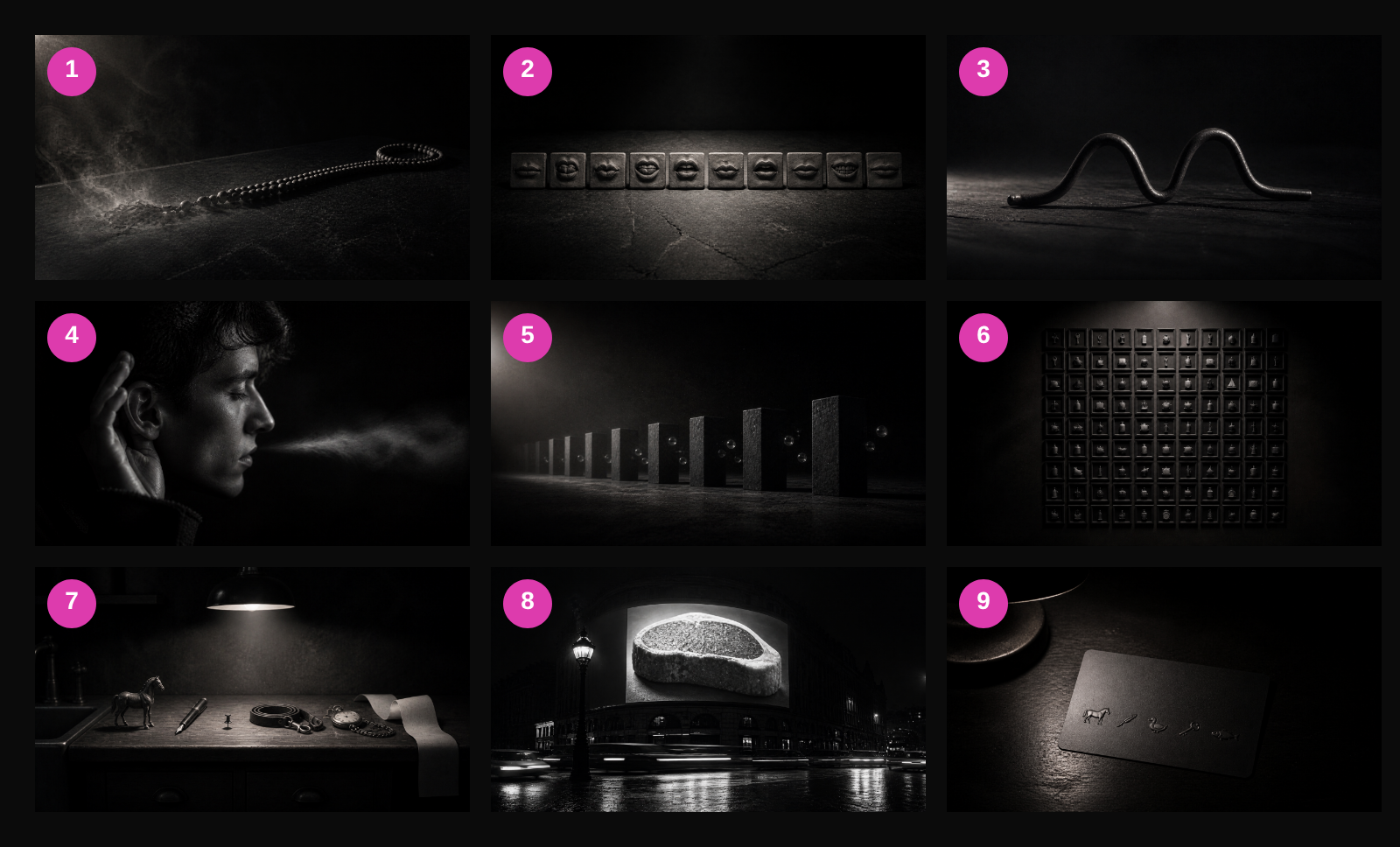
- The major system turns digits into consonant sounds and sounds into words. Image: a long number dissolving into a line of spoken letters.
- The code: 0 is s or z, 1 is t or d, 2 is n, 3 is m, 4 is r, 5 is l, 6 is sh or ch, 7 is k, 8 is f or v, 9 is p or b. Image: ten numbered tiles each carrying a carved mouth shape.
- Remember the code by its natural hooks: one downstroke like a t, two like an n, an m on its side for 3. Image: a 3 lying on its back looking like an m.
- It is the sound that counts, not the spelling: knee is 2, phone is 82. Image: an ear held up to a word, the silent letters fading.
- Vowels and w, h, y are free; use them to make any word you like. Image: coloured vowels floating loose between fixed consonant blocks.
- One fixed image per two-digit number, from 00 to 99. Image: a ten-by-ten grid of small pictures, every square filled.
- A worked example: a long number read as a few familiar words. Image: a shopping list of five ordinary objects beside a ten-digit number.
- A real example: a startup's monthly numbers as beef, a chair, a lead bar and milk on one walk; at each picture, ask what it means. Image: a slab of beef on a giant illuminated sign above a busy London junction.
- Worth the setup for anyone who works with numbers; PINs, cards, dates and statistics become instant images. Image: a credit card with small pictures embedded along its numbers.
Sources
- Mark Channon, How to Remember Anything (Hodder Education)
- Mark Channon, The Memory Workbook (Hodder Education)
Loci
Build the memory palace in this article inside Loci — store your locations, link images, and rehearse with spaced repetition.
Try it in LociMemory School community
Learn directly with Mark inside the Memory School community on Skool — monthly lessons, practice, and Q&A.
Join Memory SchoolAbout the author
Mark Channon
Grand Master of Memory (1995). Author of three books on memory published by Hodder and Nick Hern. Creator of BBC1's Monkhouse's Memory Masters. Memory coach on Channel 4's Can I Improve My Memory?
Read full bio →