
Study and Learning
The Testing Effect (Roediger and Karpicke 2006) Explained
Testing yourself makes things last far longer than reading them again, even though rereading feels better. What Roediger and Karpicke found in 2006 and 2008, what it does not show, and how to use it.

For a number of years I ran workshops for actors at the Actors Centre in London, and that work led to the book Learning Your Lines. What actors understand better than anyone is rehearsal. Rehearsal is not reading the script and repeating it. The script goes down, your scene partner gives you the cue, and you search for what comes next while you move, find your mark and feel the scene. You get it, or you get prompted, and you go again.
That is active recall, and it may be the most powerful kind there is: you are testing yourself constantly, without the pressure of a test.
That gap, between what went in and what you can get out, is what this research is about. The testing effect is the finding that pulling information out of your memory, by testing yourself, makes it stick far longer than reading it again. The test does not have to be an exam. Any honest attempt to recall, with the book shut, counts. The best-known proof comes from Roediger and Karpicke in 2006, with a second paper in 2008 that made the point sharper.
Why it matters
Ask how to revise and you get some version of the same answer. Read the notes again. Highlight. Rewatch the lecture. Go over it one more time.
It feels productive because the material gets more familiar with every pass. The catch is that familiar and retrievable are different things. You can recognise a page you could never have written out. That is the reason behind a familiar question from students: "I've been over it five times, so why has it gone?" The testing effect is the clearest answer to it.
The research: Roediger and Karpicke, 2006
- In short: Students who practised recalling a passage remembered much more of it two days and a week later than students who simply read it again. The rereaders felt surer of themselves all the same.
- What they did: Students studied short prose passages. Some then read the passage a second time. Others tried to recall it from memory, and nobody told them what they had missed or got wrong. A final test came five minutes, two days or one week later.
- Who was involved: Undergraduates: 120 in one experiment and 180 in the other.
- What they found: At five minutes, rereading was ahead. At two days and at a week, the order flipped, and clearly. In the second experiment, a week on, those who had practised recall remembered 61% against 40% for those who had reread. The rereading students were the more confident group, even though they remembered less.
- What they concluded: A test is not only a way of measuring what you have learned; taking one is a strong way to learn. Rereading gives a sense of knowing that it does not live up to.
The research: Karpicke and Roediger, 2008
- In short: Getting something right once is not the finish line. Students who carried on testing themselves on word pairs they already knew kept most of them a week later. Those who only carried on studying them kept about a third.
- What they did: Students learned 40 Swahili and English word pairs. As soon as a pair had been recalled correctly, it went down one of four routes: studied again, tested again, both, or dropped from practice altogether. The final test came a week later.
- Who was involved: College students, in an experiment published in the journal Science.
- What they found: Where testing continued on pairs already learned, recall a week later was about 80%. Where study continued with no further testing, it was around a third.
- What they concluded: The act of retrieving is what makes learning stay put, so taking items out of practice the moment you know them has a real cost.
Two single experiments, both with students, one using prose and one using word pairs. On their own they would be a promising start. They are not on their own. The testing effect has been repeated many times since, with different materials, different ages and in different settings, and it is one of the best-supported findings in the whole of learning science.
What I take from it
These are practical readings, not findings.
The result worth coming back to is the five-minute one, because it explains why bad revision is so popular. Reread something and quiz yourself straight away, and it all seems to be there. You close the book feeling great. The study says do not trust that feeling. The benefit of testing showed up days later, not minutes later, so for a little while you have to do it on faith.
I put it like this: there should be some effort involved, and "the harder it feels to retrieve something, the stronger that connection is going to be." That line is mine, not from either paper. It does match what those students went through, though. The fumbling, half-remembering feeling is not a sign that recall practice is failing. It is the bit doing the work.
Rehearsal is this finding in its fullest form. Every time an actor reaches for a line instead of reading it, that is a retrieval, and a rehearsal is hundreds of them. The students in these studies recalled a passage silently at a desk; rehearsal adds movement, emotion and a scene partner giving the cue. The papers did not test those extras, so how much more they add is an open question, but the core is the same: find it, don't reread it.
The 2008 paper matters for rehearsal. The actor's method is simple: see the cue, say the line aloud from memory, then check the script straight after. Once a speech is solid, the temptation is to stop running the lines you already have and pour all your time into the shaky ones. Karpicke and Roediger is the reason to keep going back to the cue for lines that already feel learned. It costs seconds and it protects the whole speech.
The same goes for a memory palace, the technique where you picture what you need to remember as images placed along a route you know well, such as the rooms of your home. A palace is not a rival to the testing effect. It is one of the best things you can test yourself on, because every location is already a question: what is here? Walk a palace with the material closed and you are doing retrieval practice with the order built in. How to Build a Memory Palace: A 7-Step Beginner's Guide (With Worked Examples) shows you how to make one.
What it does not show
- It does not show rereading is useless. Rereading won at five minutes. It has a place, for instance a careful first read to understand something. It just should not be the whole plan.
- It does not show testing pays off within minutes. The gap opened at two days and a week. If you test yourself and then judge the result five minutes later, you will not see the benefit.
- It does not mean retrieval is the only thing that matters. Understanding the material, making strong pictures and spacing your sessions all count too.
- Keep the context. One study used short prose passages, the other Swahili word pairs, and the final tests came a week later. That is a strong base, but it is what was tested.
- The 2006 students got no feedback. Recall still won without it. Even so, check straight after each recall so a wrong answer does not settle in. That is practice advice, not something this paper set out to test.
How far apart to put those recalls is a separate question with its own research and its own article: Cepeda's work on spacing is covered in The Spacing Effect (Cepeda 2006) Explained.
How to use it this week
Choose one thing you need to keep. A chapter, a presentation, the thirty terms for Thursday's exam, a speech.
- Read it once to understand it. Slowly, asking what it means and why it matters. One good pass, not five.
- Shut it and write down everything you can. A blank sheet, five minutes, no peeking. Scrappy bullet points are fine.
- Open it and check. Mark what you missed or got wrong, and give those parts a stronger picture.
- Make cues. A cue on the front of a card, the answer on the back. Or use the actor's version: cover the line, look at the cue, say the line out loud, then check.
- Keep the ones you know in play. Do not retire a card the first time you get it right. That is the 2008 lesson in one sentence.
- Walk the palace with the book closed. If the material lives on a memory palace, go location by location and say the real information aloud before you look.
- Go again in a day or two. That is where the benefit showed up in the 2006 study, at two days and a week.
- Expect it to feel hard. Patchy recall is not failure. It is the workout.
If you would rather not make the cards yourself, LOCI turns your material into key ideas and images, gives each one a flashcard with the real information on the back, and has spaced retrieval practice built in.
For the bigger picture, The Spacing Effect (Cepeda 2006) Explained covers how far apart your recalls should be. The Forgetting Curve (and How to Beat It) shows what you are working against. How to Remember What You Read puts recall to work on a whole book, and Study Techniques That Actually Work fits all of this into a study routine.
Memory map
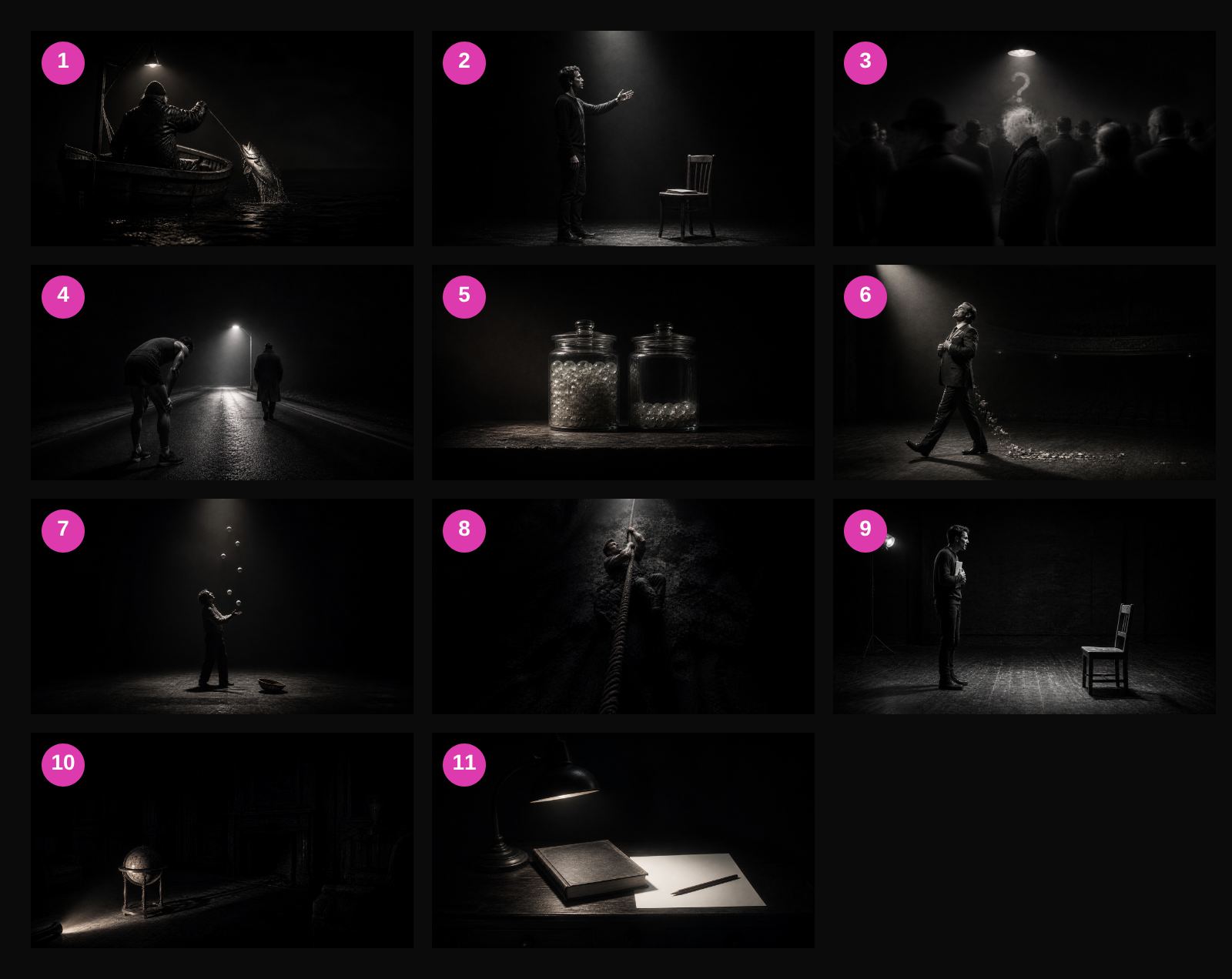
- The testing effect: recalling something makes it last longer than rereading it. Image: a fisherman hauling a big silver fish up out of dark water.
- Rehearsal is active recall: you search for the words instead of rereading them. Image: an actor on a bare stage, script face down on a chair, reaching for the next line.
- Familiar is not the same as retrievable. Image: a face in a crowd you recognise but cannot put a name to, a question mark of fog around their head.
- Rereading won at five minutes; recall won at two days and a week. Image: a sprinter flagging on a long road while a steady walker strides past.
- A week on, the recall group kept 61% and the rereaders 40%. Image: two glass jars of marbles, one well filled, one much emptier.
- The rereaders felt more confident and remembered less. Image: a man strutting across a stage while his pockets quietly empty behind him.
- Keep testing what you already know: about 80% against about a third. Image: a juggler who keeps every ball in the air instead of setting the easy ones down.
- Effort is part of it: the harder the recall feels, the stronger the connection (a practice line, not a finding). Image: a climber pulling himself up a rope hand over hand.
- See the cue, say the line, then check the script. Image: an actor in a rehearsal room, script pressed face down against his chest, speaking to an empty chair.
- Every palace location is a question. Image: a torch beam landing on one object at a time in a dark room.
- Blank sheet first, check second. Image: a closed book with a pencil resting on a clean sheet of paper beside it.
Sources
- Mark Channon, Learning Your Lines (Nick Hern Books)
- Roediger, H. L., III, and Karpicke, J. D. (2006). Test-enhanced learning: taking memory tests improves long-term retention. Psychological Science, 17(3), 249 to 255. https://doi.org/10.1111/j.1467-9280.2006.01693.x
- Karpicke, J. D., and Roediger, H. L., III (2008). The critical importance of retrieval for learning. Science, 319(5865), 966 to 968. https://doi.org/10.1126/science.1152408
- Cepeda, N. J., Pashler, H., Vul, E., Wixted, J. T., and Rohrer, D. (2006). Distributed practice in verbal recall tasks: a review and quantitative synthesis. Psychological Bulletin, 132(3), 354 to 380. https://doi.org/10.1037/0033-2909.132.3.354 (named in passing; broken down in The Spacing Effect (Cepeda 2006) Explained)
Are you old school? Get Mark's book Learning Your Lines and dive in depth.
Loci
Build the memory palace in this article inside Loci — store your locations, link images, and rehearse with spaced repetition.
Try it in LociMemory School community
Learn directly with Mark inside the Memory School community on Skool — monthly lessons, practice, and Q&A.
Join Memory SchoolAbout the author
Mark Channon
Grand Master of Memory (1995). Author of three books on memory published by Hodder and Nick Hern. Creator of BBC1's Monkhouse's Memory Masters. Memory coach on Channel 4's Can I Improve My Memory?
Read full bio →